| Monitoring of groundwaters in Hungary |  |
Introduction
Two large groups of subsurface aquifers are distinguished in Hungary:
- clastic sediments of the basin-type areas (containing balnk-filtered water, shallow and deep groundwaters)
- karstreservoirskarstic reservoirs of the bedrock formations.
In addition, there are some marginalalso some other, non-karstic, fissured aquifers too.of minor significance in the mountainous areas.
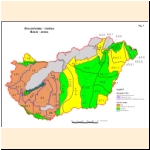
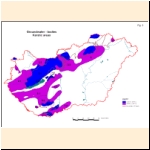
The identification of the groundwater bodies provided by the EU Water Framework Directive adjusts to the above figure. Figure 1 and Figure 2 are presenting the planned delineation of the groundwater bodies under way, on the basis of the ongoing project being implemented by the Water Management Research Group of the Hungarian Academy of Sciences (MTA Vízgazdálkodási Kutatócsoport;). In the basin-type areas (Figure 1) the borders of groundwater-bodies are constituted – in addition to the geological borders of the basin – by the borders of the areas of various hydrodynamic character (sandy plateaus, fans, recharge areas and the discharge areas in depressions, hilly regions and their mixture), the underground watersheds and by the borders of the subsurface flow systems. In vertical sense the shallow zone (< 20 m), the zone of drinking-water ( 20 – approx 500 m), and the zone yielding water of temperature higher than 30 °C ( > approx. 500 m) can be distinguished inside the particular areas (in certain areas this geothermal complex is missing). Figure 2 presents the karstic reservoirs of the bedrock formations, sorted into the categories of cool (< 30 °C) and warm waters ( > 30 °C). The basin-sediments usually overlap the latter. In Figure 2, the non-karstic parts of the mountainous areas are the aforementioned other aquifers.
Hereinafter the groundwater monitoring system will be introduced, the harmonisation of which with the above listed water bodies is in progress. In addition to the hydrological basic networks to be presented, the groundwater level monitoring network of the Geological Institute of Hungary (MÁFI), and the environmental monitoring network under development (for the assessment of the quality of shallow groundwaters) are significant. When characterizing the bodies of groundwater, observation of the data of the very numerous existing wells acquired in the course of their construction, the operational data of the water supply works and the knowledge gained from the ongoing diagnostical works on the vulnerable perspective and developed sources of water supply is very important.
|